Protective packaging
Void fill · Cushioning · Blocking & bracing — bubble · foam · paper · pulp
Protective packaging is the stuff inside the box: bubble, foam, air pillows, crumpled paper, molded pulp, corrugated inserts. It's easy to buy too much of it, and easy to buy the wrong kind and still get damage.
The first question is what the material is actually for — filling space so the product can't move, absorbing shock when the box is dropped, or holding a heavy item in place. Those are three different jobs, and one material rarely does all three well.
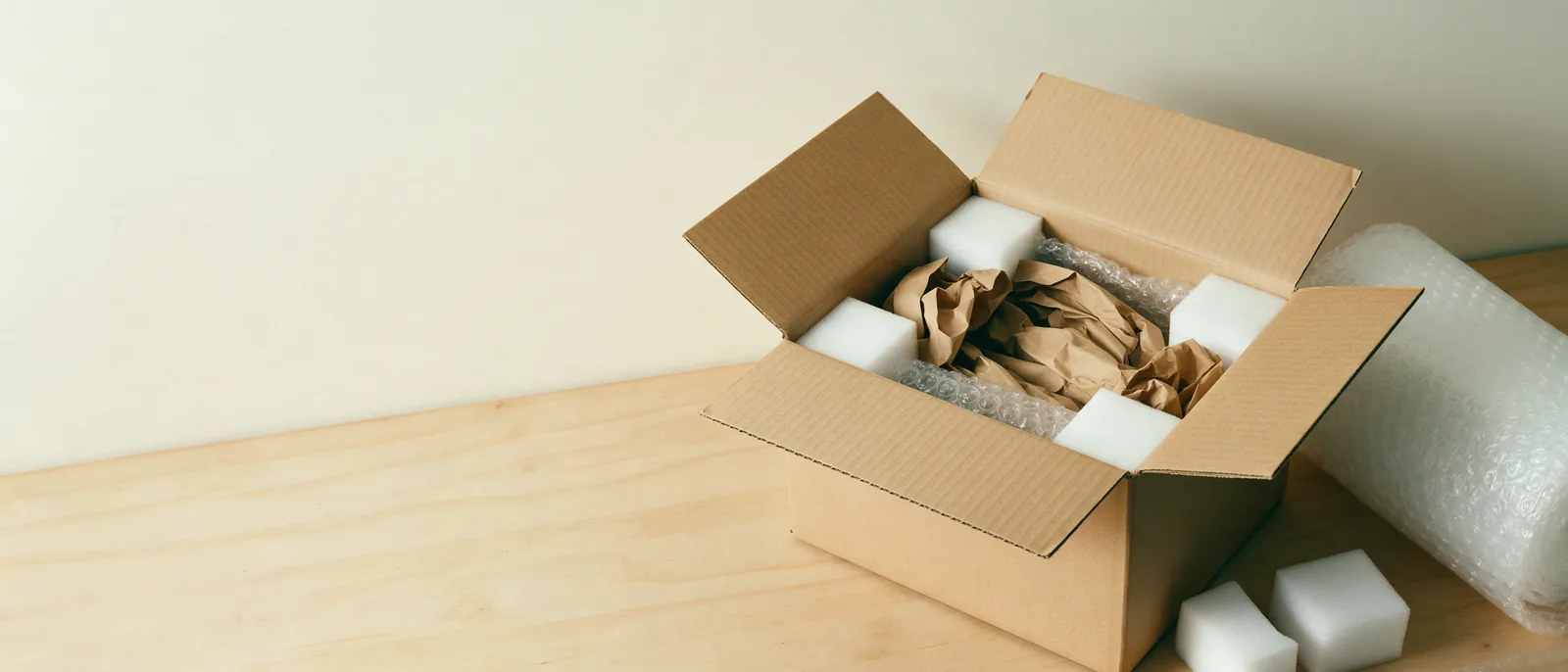
Void fill, cushioning, and blocking and bracing.
Void fill takes up empty space so the product doesn't shift: crumpled paper, air pillows, loose fill. Cushioning absorbs shock and vibration: bubble, foam, molded pulp. Blocking and bracing holds the product in position: foam end caps, corrugated inserts and partitions.
The right choice depends on the product's weight and fragility, the box, and the shipping environment — parcel networks drop and tumble packages far more than full-pallet freight does.
Use it when
- Products are arriving damaged, or customers complain about how they're packed.
- You ship fragile, heavy or high-value items by parcel.
- Pack-out takes too long or uses too much material.
- You want to move from plastic to paper-based materials where it makes sense.
What goes into choosing protective packaging.
- The product
- Weight, dimensions, fragility, finished surfaces that scratch, and the most vulnerable points (corners, protrusions, glass).
- Shipping environment
- Parcel or LTL or full truckload, likely drop heights, stacking, temperature and humidity. Standard test procedures such as ISTA and ASTM D4169 simulate these conditions.
- Bubble and air
- Bubble rolls and bags in different bubble sizes (small bubbles for surface protection, larger bubbles for cushioning). Air pillows inflated on demand for void fill.
- Foam
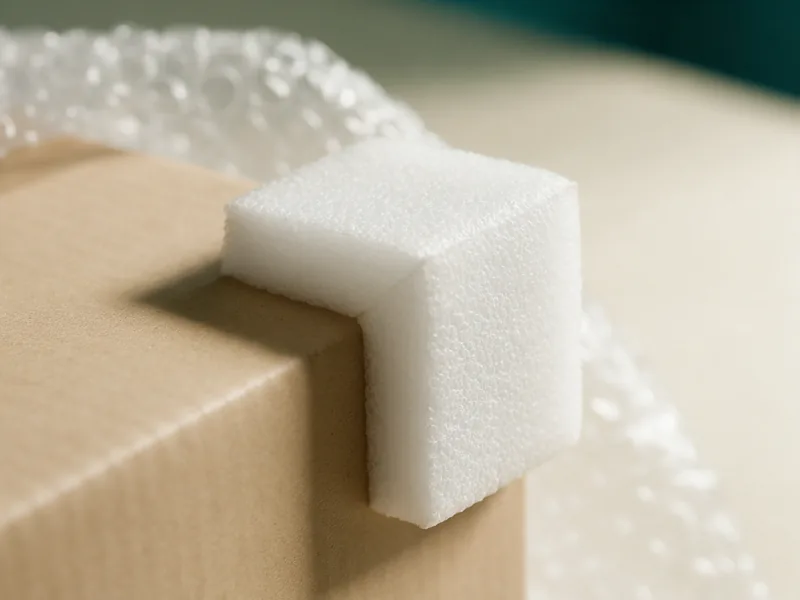
- Polyethylene (PE): closed-cell, resilient, good for repeated impacts — planks, corner blocks, roll foam. Polyurethane (PU): soft open-cell foam for lighter, delicate items. EPS: molded expanded polystyrene, light and economical. Specified by type, density and thickness.
- Paper and fiber
- Kraft void fill dispensed from a converter, honeycomb paper, and molded pulp trays and end caps. Corrugated inserts, pads and partitions for blocking and bracing.
- Pack station
- How it's packed: by hand from a roll, from a dispenser or inflation machine, or with custom fitted inserts. Space for storage matters too.
- Cushion design
- For engineered foam, cushion curves relate drop height, static loading and foam thickness to the shock the product sees. Getting this right is what separates "enough" from "too much."
What drives the cost of protective packaging.
The material is often not the biggest cost. Labor at the pack station, storage space and freight on oversized boxes usually add up to more.
Material
Price per unit of material — per foot of bubble, per pillow, per foam part. Custom-cut or molded foam costs more than stock forms.
Pack-out labor
Time spent packing each order. A fitted insert can cost more than loose fill and still be cheaper overall if it's faster to pack.
Equipment
Paper dispensers, air pillow machines and foam-in-place systems are often supplied under a materials agreement — read the terms.
Storage
Pre-made bubble and loose fill take a lot of warehouse space. On-demand systems store flat or rolled material.
Box size and freight
More protective material often means a bigger box, and a bigger box can mean higher dimensional-weight charges on parcel shipments.
Damage
Replacement product, reshipping and lost customers. Under-protecting is expensive too.
Where protective packaging money leaks.
Oversized boxes full of fill
A box a few inches too big needs more void fill and costs more to ship. Right-sizing the box often saves more than changing the fill.
Void fill used as cushioning
Crumpled paper or air pillows keep a product from shifting, but they don't absorb much shock. Fragile items need real cushioning.
Over-packing
Wrapping everything in three layers of bubble because one item broke once is expensive. Match protection to the product.
Slow pack stations
Cutting bubble by hand and building fill from scratch on every order adds labor to every shipment. Dispensers and fitted inserts can pay back quickly.
No damage data
Without knowing where and how products are damaged, any change is a guess. Track damage claims by product and carrier.
Questions buyers ask me about protective packaging.
What's the difference between void fill and cushioning?
Void fill fills empty space so the product can't move around inside the box. Cushioning absorbs the energy of drops and impacts so less of it reaches the product. Many shipments need both: cushioning around the product and void fill to take up the remaining space.
Which foam should I use: PE, PU or EPS?
PE foam is closed-cell and resilient, good for repeated impacts and heavier items. PU foam is soft and open-cell, good for lightweight, delicate products. EPS is molded, light and economical, often used for custom end caps and single-use protection. The product weight, fragility and shipping environment decide it.
Is paper or plastic protective packaging better?
Neither is better everywhere. Paper void fill and molded pulp are widely recyclable and work well for many products. Plastic bubble and foam often give more cushioning for less weight and volume. The right answer depends on the product, the customer's expectations and the damage rate.
How do I know how much cushioning a product needs?
Start with the product's weight and fragility and the drop heights it's likely to see. For engineered foam, cushion curves give the right thickness and loading. Then test — ISTA procedures are the common standard — before rolling it out.
Send me your protective packaging spec.
Send me a photo of a packed order and tell me what's breaking. I'll look at the box, the fill and the pack station before recommending anything.
Helpful to include
- Product, weight and dimensions
- How it ships (parcel, LTL, truckload)
- Current box size and packing materials, or photos of a packed order
- Where and how damage happens
- Orders packed per day and how they're packed
- Any material preference (paper, plastic, recycled content)
Related tools
Corrugated inserts and the shipper itself are often part of the fix; these guides cover the board.