Corrugated boxes
RSC · HSC · FOL · Die-cut — B / C / BC flute — 32 ECT and up
Corrugated is most of what I quote. It looks like a commodity until you line up three quotes for the same box and find three different board grades, two different flutes and one supplier who measured the outside instead of the inside.
A good corrugated spec is short: style, inside dimensions, flute, board grade, print and joint. Get those six right and the box usually takes care of itself. Get one wrong and you pay for it on every order, or on the day a pallet collapses in a warehouse.

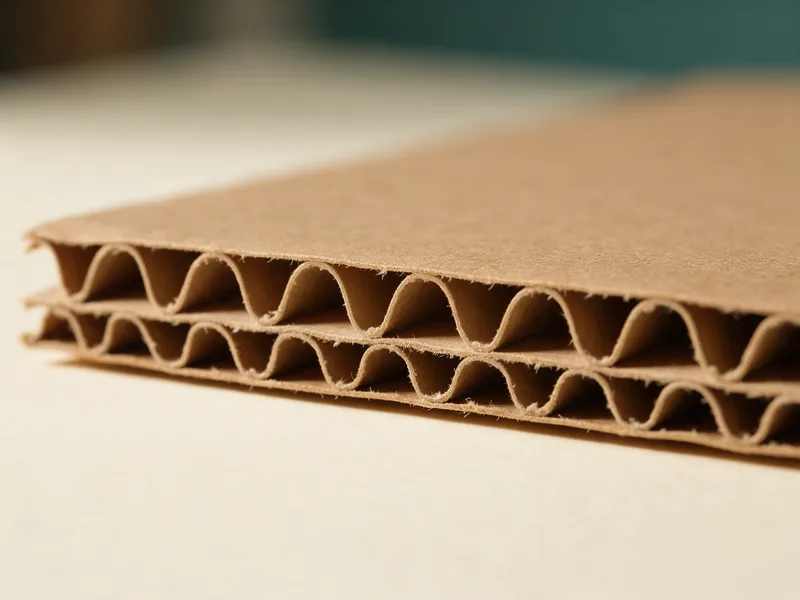
Paper liners, a fluted medium, and a lot of engineering in between.
Corrugated board is a fluted sheet of paper (the medium) glued between flat sheets of paper (the liners). Single-wall board has one medium and two liners; double-wall has two mediums and three liners. The arches in the flute carry the load, the same way an arch carries a bridge.
That structure gives you a lot of stacking strength and cushioning for very little weight, which is why corrugated is the default shipping container for almost everything that moves on a pallet or through a parcel network.
Use it when
- You need a shipping case that stacks on a pallet or survives parcel handling.
- The box has to be strong in compression but light, cheap and recyclable.
- You want a retail-ready tray or display that also works as a shipper.
- You need inserts, partitions or pads to separate and protect product.
Six fields that make a corrugated spec.
Send these and a supplier can quote without guessing. Leave any of them out and you'll get prices for different boxes.
- Style
- The box design. RSC (regular slotted container) is the workhorse: all flaps the same length, outer flaps meet in the middle, very little waste. HSC (half slotted) is an RSC with no top flaps, used with a separate lid. FOL (full overlap) has outer flaps that overlap the full width for extra strength across the top and bottom. Die-cut styles (mailers, trays, displays) are cut with a custom die for a precise shape.
- Inside dimensions
- Always L × W × D, inside, in that order. Length and width describe the opening (length is the longer side), depth is the third dimension. Quoting outside dimensions, or mixing up the order, is the most common reason two quotes don't match.
- Flute
- The size of the corrugation. C-flute is the default for shipping cases; B-flute is thinner with a flatter print surface; E and F are thinner still for retail and mailers; BC double-wall is the common step up for heavy loads. See Flute Types Explained.
- Board grade
- How strength is certified. ECT (edge crush test, lb per inch, e.g. 32 ECT, 44 ECT) predicts stacking strength. Mullen (burst test, e.g. 200#) measures puncture resistance. They measure different things and don't convert — see ECT vs. Mullen.
- Liners
- Brown kraft is standard. White top or mottled white liners print brighter for retail. Recycled and virgin content both work; what matters is that the board meets the certified grade.
- Plain, or flexo printed (usually 1–3 colors on shipping cases). High-graphics retail boxes may use litho-laminated or digitally printed sheets. Each flexo color needs a printing plate, which is a one-time cost.
- Joint
- How the box is closed into a tube at the plant — the manufacturer's joint. Glued is by far the most common; stitched (staples) and taped joints still exist for specific needs.
- Packing
- Bundle count, units per pallet and pallet size. These affect freight and how the boxes arrive at your packing line.
Where the price on a corrugated quote comes from.
Corrugated is priced on board area, board grade and conversion. Freight is a bigger share than most buyers expect, because empty boxes are mostly air until they're flat.
Board area
Price follows square footage of board. A slightly smaller box, or a style that wastes less trim, takes cost out of every unit. The Price per MSF Calculator converts between $/M and $/MSF so you can compare quotes on the same basis.
Board grade
Higher ECT grades and double-wall use more or heavier paper. The jump from single-wall to double-wall is one of the biggest steps in the price list.
Style and tooling
RSCs need no custom tooling. Die-cut boxes need a cutting die — a one-time cost that pays back on volume, but not on a short run.
Print
Each flexo color adds a plate and press setup. Full-coverage or high-graphics printing costs considerably more than a one-color box mark.
Run size
Setup is spread over the order quantity. Very small runs carry a lot of setup per box; stock sizes avoid most of it.
Freight
Distance from the plant, how many boxes fit on a truck, and whether you take full truckloads. A plant closer to you can beat a cheaper box price from far away.
The places I most often find money in a corrugated program.
Board grade that doesn't match the load
A box spec'd years ago for a heavier product, or bumped up to double-wall after one bad shipment, often stays that way forever. Run the stack through the Warehouse Stacking Calculator before assuming you need the heavier grade — and before assuming you don't.
Boxes bigger than the product
Extra inches mean more board, more void fill and, on parcel shipments, dimensional-weight charges. It also means fewer cases per pallet.
Pallet overhang
Cases hanging over the pallet edge lose a significant share of their compression strength, because the box walls aren't supported. A case that's slightly too big for the pallet footprint is a common root cause of crushed loads.
Interlocked stacking where strength matters
Interlocking (brick) patterns help load stability but put box corners over the open middle of the box below, which reduces stacking strength compared with column stacking. Choose the pattern deliberately.
Humidity
Corrugated loses compression strength as it absorbs moisture. A box that works in a dry warehouse can fail in a humid one or in a cooler. Spec for the environment the box actually lives in.
Too many near-identical sizes
Five boxes that differ by half an inch each carry their own setup and minimums. Consolidating to fewer sizes can lower price and inventory at the same time.
Questions buyers ask me about corrugated boxes.
What does 32 ECT mean?
It means the combined board withstood at least 32 pounds per lineal inch in the edge crush test. ECT is the board's resistance to being crushed on edge, which is what predicts how well a box stacks. 32 ECT single-wall is one of the most common shipping-case grades in the U.S.
What's the difference between an RSC and an FOL box?
On an RSC the outer flaps meet in the middle of the box. On an FOL (full overlap) box the outer flaps overlap across the full width, giving a double layer of board on the top and bottom. FOL uses more board, so it costs more, but it adds strength and resistance to rough handling across the flaps.
How do I measure a box for a quote?
Measure the inside, and give it as length × width × depth. Length and width are the opening, with length the longer of the two; depth is the remaining dimension. If you're replacing an existing box, sending a sample is even better.
Can I switch from a 200# Mullen box to 32 ECT?
Often, yes — many shippers made that switch when ECT grades became common. But the two tests measure different things and there's no exact conversion, so the right approach is to check the stacking requirement for your load and test the new box before switching the whole program.
Is double-wall always stronger than single-wall?
In general, double-wall carries more load, but a high-grade single-wall can outperform a low-grade double-wall in some applications. Compare certified ECT grades and the actual stacking requirement rather than wall count alone.
Send me your corrugated spec.
Send me what you're running now, or what you need to run. I'll check the spec against the load and the pallet before I quote it, and I'll tell you if I think the box is wrong.
Helpful to include
- Inside dimensions (L × W × D) and box style
- Product weight per case and how high cases are stacked
- Current board grade and flute, if known
- Print colors and coverage, or a photo of the current box
- Annual volume and typical order size
- Ship-to location
Related tools
- Price per MSF CalculatorConvert $/M, $/MSF and $/lb for any sheet size.
- Warehouse Stacking CalculatorStatic load, safety factor and a suggested ECT grade.
- Pallet Pattern GeneratorCases per layer and per pallet, with a pattern diagram.
- Trailer Load CalculatorLoaded pallets per trailer by floor space, height and weight.
- Flute Types ExplainedA, B, C and double-wall flutes: caliper and common uses.
- ECT vs. Mullen (Burst Test)What each test measures and why they don't convert.
- All free packaging tools