Folding cartons
SBS · CUK · CRB — 14–24 pt — RTE · STE · Auto-bottom · Seal end
A folding carton has two jobs that pull in different directions: look right on a shelf and run without jamming on a packing line. Most carton problems I get called about are the second kind.
The spec is board type, caliper, style, dimensions, print and finish. The parts people skip are the ones that matter on the line — which way the carton is loaded, whether it's erected by hand or by machine, and what tolerance the cartoner will accept.

Printed paperboard, cut, creased and glued flat.
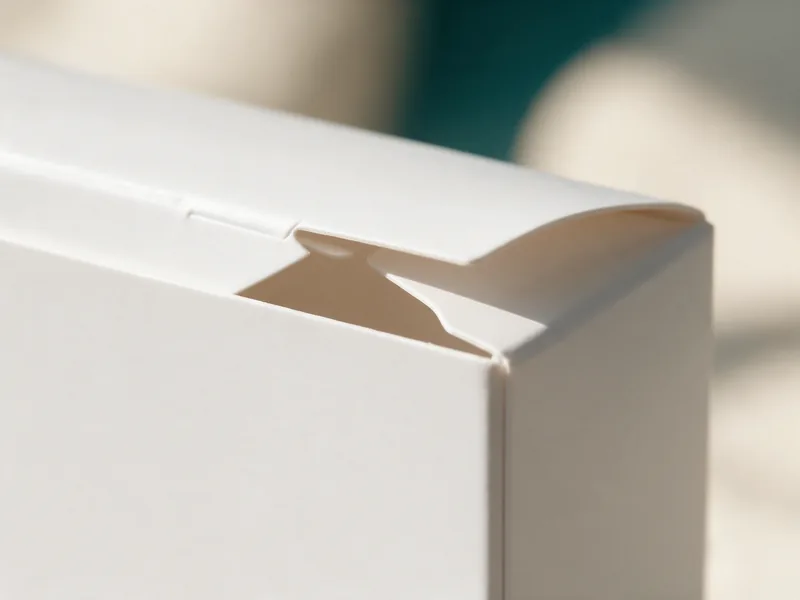
A folding carton is made from paperboard — thicker and stiffer than paper, thinner than corrugated. The board is printed in sheets or on a web, die-cut and creased into a blank, then usually folded and glued into a flat tube that ships to you ready to erect.
Cartons are the primary package you see on retail shelves: cereal, frozen food, pharmaceuticals, cosmetics, small hardware, toys. They're usually packed into a corrugated shipper for distribution.
Use it when
- The package is on a retail shelf and the graphics have to sell it.
- The product is light enough that paperboard alone protects it on the shelf.
- You're running a cartoner, or packing by hand at moderate volume.
- You want a paper-based alternative to a plastic clamshell or blister.
What goes on a folding carton spec.
- Board type
- SBS (solid bleached sulfate): bright white throughout, the usual choice for food, pharma and cosmetics where print quality matters. CUK / CNK (coated unbleached or natural kraft): strong and tear-resistant, common for beverage carriers and frozen food. CRB (coated recycled board): economical, common for dry food and household goods.
- Caliper
- Board thickness in points, where 1 pt = 0.001". Retail cartons commonly run roughly 14–24 pt. Heavier products, larger cartons and machine erecting generally need more caliper; a heavier board than necessary is pure cost.
- Style
- RTE (reverse tuck end): top and bottom tucks close from opposite panels, the most common and economical layout. STE (straight tuck end): both tucks close from the same panel, cleaner for windowed fronts. Auto-bottom / crash lock: the bottom locks itself when the carton is opened, faster to hand-pack and good for heavier items. Seal end: ends are glued shut, typical for cereal and machine-filled cartons. Plus sleeves, trays and custom structures.
- Dimensions
- Inside L × W × D, where length and width describe the opening that the product goes through. Give the product dimensions too, so the carton has the right clearance.
- Offset lithography is the standard for high-quality cartons, usually four-color process (CMYK) plus spot colors where brand colors must match. Flexo and digital printing are also used, with digital suited to short runs and versioning.
- Coatings and finishes
- Aqueous or UV coatings and varnishes for scuff resistance and gloss or matte finish; windows (die-cut opening with or without film); embossing, debossing and foil stamping for premium packs.
- Line requirements
- Hand-packed or machine-erected, cartoner make and model, load direction (end-load or top-load), and any glue or coding requirements. This is the part that decides whether the carton runs.
What moves the price of a folding carton.
Board and caliper
Board is priced by weight and grade. SBS generally costs more than recycled board, and every extra point of caliper adds material across the whole run.
Sheet layout
Cartons are printed and cut several-up on a large sheet. A carton size that nests more blanks per sheet uses less board per carton — small dimension changes can make a real difference.
Colors and coatings
Each spot color adds ink and press setup; specialty coatings, foil and embossing add operations and tooling.
Tooling
A custom cutting die, plus printing plates and any embossing or foil dies. These are one-time costs, but a design change usually means new ones.
Gluing
A straight-line glued tuck end is simple. Auto-bottoms, multi-corner glued trays and windows add folder-gluer complexity and cost.
Run length
Make-ready on a carton press is significant, so cost per carton falls sharply as quantity rises. Many SKUs at short runs carry a lot of setup each.
Where carton programs lose money.
Caliper picked by feel
Boards get heavier because a sample "felt flimsy." If the carton protects the product on the shelf and runs on the line, extra caliper is just cost on every unit.
Cartons that don't run
A carton that jams the cartoner costs more in downtime than in board. Structure, crease quality and dimensional tolerance need to match the machine.
Artwork churn
Every copy change can mean new plates and a new proof cycle. Grouping changes and planning them into reorders saves real money.
SKU proliferation at short runs
Separate small print runs for each flavor or size multiply make-ready. Shared structures, gang runs or digital printing for low-volume SKUs can help.
Ignoring the shipper
A carton dimension that's convenient for graphics can leave dead space in the corrugated shipper and on the pallet. Size the carton and the case together.
Questions buyers ask me about folding cartons.
What's the difference between SBS, CUK and CRB?
SBS is bleached virgin fiber, white all the way through, with the best print surface. CUK (or CNK) is unbleached kraft with a white coating, stronger and more tear-resistant. CRB is made from recycled fiber with a coated white surface; it's economical and widely used for dry goods. The right choice depends on print expectations, strength needs, food contact and cost.
What does 18 pt mean?
Folding carton board is measured in points, and one point is one thousandth of an inch. An 18 pt board is about 0.018" thick.
What's the difference between reverse tuck end and straight tuck end?
On a reverse tuck end carton, the top and bottom tuck flaps are attached to opposite panels. On a straight tuck end carton, both tucks are attached to the same panel, which gives an uninterrupted front panel — useful for windows and premium graphics. RTE is usually the more economical layout.
Will a new carton run on my cartoner?
That depends on structure, board, crease quality and tolerances matching your machine. Send the machine details and a current carton, and plan a line trial with sample cartons before releasing a full run.
Send me your folding carton spec.
Send me the carton and, if it runs on a machine, the machine. I'll look at board, caliper and layout before quoting, and flag anything that's likely to cause trouble on the line.
Helpful to include
- Product dimensions and weight
- Carton style, or a sample of the current carton
- Board type and caliper, if known
- Number of colors, coatings and finishes
- Hand-packed or machine-erected (cartoner make and model)
- Quantities per SKU and number of SKUs
Related tools
Cartons ship in corrugated cases, so the pallet and freight tools apply to the shipper.