Stretch & shrink film
Cast · Blown — hand · machine — POF · PE shrink
Stretch film is the packaging that gets bought by the roll and should be judged by the pallet. A cheaper roll that takes more film per load isn't cheaper, and a heavier film is often covering for a wrapper that isn't set up right.
Shrink film is a different job: it's heated to tighten around a product or a bundle. Both are plastic film, but they're specified, applied and priced differently, so I keep them separate.
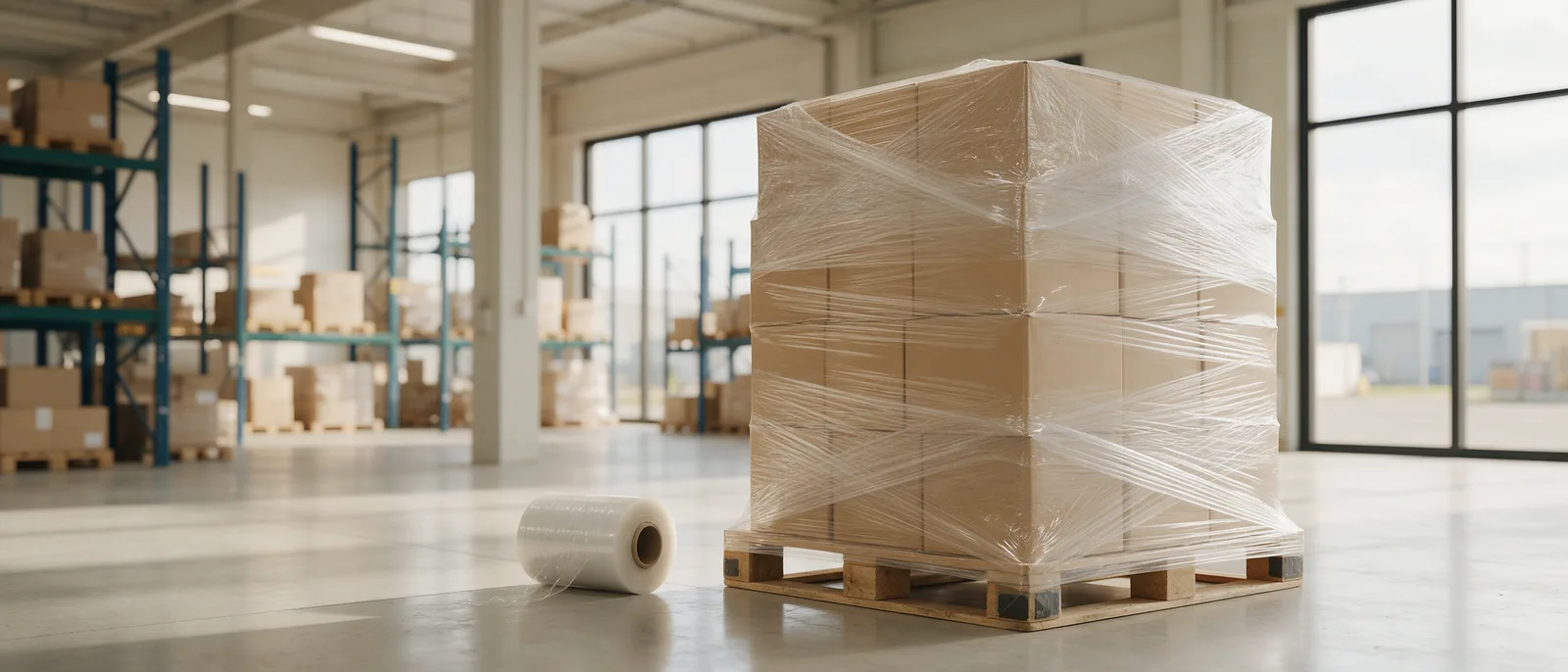
Two films, two jobs.
Stretch film is linear low-density polyethylene that's stretched as it's applied and clings to itself. The film tries to recover its original length, and that tension holds the pallet load together. It's applied by hand or by a stretch wrapper.
Shrink film is applied loosely, sealed, and then heated, usually in a shrink tunnel or with a heat gun, so it contracts tightly around the product. Polyolefin (POF) shrink is used for retail packaging; heavier polyethylene shrink film bundles multipacks and covers pallets.
Use it when
- Stretch: you need to unitize pallet loads for storage and shipping.
- Shrink (POF): you want a clear, tight retail overwrap or multipack.
- Shrink (PE): you're bundling heavier items like cases of bottles or cans.
- You want to cut film use or wrapping time without loosening the load.
How stretch and shrink film are specified.
- Stretch: cast vs. blown
- Cast film is clear, quiet off the roll and consistent — the most common choice. Blown film is generally tougher and more puncture-resistant, which helps with sharp-cornered or irregular loads.
- Stretch: hand vs. machine
- Hand film comes on smaller rolls sized for a person to handle. Machine film comes on larger rolls for stretch wrappers, and powered pre-stretch wrappers stretch it substantially before it reaches the load.
- Gauge
- Film thickness, where 80 ga = 0.8 mil. "True" gauge is the actual thickness; some high-performance films are sold by an equivalent gauge that claims to perform like a thicker film. Compare by performance and cost per load, not the number on the box.
- Roll size
- Width, length and core. Roll dimensions have to fit the wrapper or the hand dispenser.
- Pre-stretch and containment force
- On machine film, pre-stretch level and wrapper settings determine how much film goes on each load and how tightly it holds. Containment force is the measure of how tightly the film holds the load.
- Shrink: film type
- POF (polyolefin): clear, strong, common for retail and food. PVC: older and less common now. PE shrink: heavier gauges for bundling and pallet shrink hoods.
- Shrink: format
- Centerfold (folded in half on the roll, for L-bar sealers) or single-wound; gauge; width; and the sealing and shrink equipment it runs on.

What drives the cost of stretch and shrink film.
Resin
Film is priced closely to polyethylene resin markets, so prices move over time.
Gauge and roll weight
Thicker film means more resin per roll. Rolls are often sold by weight, so compare cost per foot or per load, not cost per roll.
Film type
Blown and high-performance films generally cost more per pound than standard cast — they need to earn it by using less per load or reducing damage.
Film used per load
Number of wraps, overlap, top and bottom wraps, and pre-stretch level decide how much film goes on each pallet. This is usually the biggest lever.
Labor and equipment
Hand wrapping is slow and inconsistent compared with a wrapper. The right equipment can cut both film and labor.
Where stretch film money leaks.
Buying by price per roll
The meaningful number is cost per load: weigh a roll before and after wrapping a known number of pallets. That's the only fair way to compare films.
Heavier film covering a setup problem
If film keeps breaking, the cause is often wrapper settings, a damaged roller or sharp pallet corners. Fixing those can let you run a thinner film.
Too many wraps
Extra wraps "for safety" add film to every pallet. Measure containment force and wrap to the requirement.
Under-used pre-stretch
A powered pre-stretch wrapper that's set low puts more film on every load than it needs to.
Unstable loads blamed on the film
Overhang, poor pallet patterns and slick cases make loads shift no matter how much film goes on. Fix the load first.
Questions buyers ask me about stretch and shrink film.
What's the difference between cast and blown stretch film?
They're made by different processes. Cast film is extruded onto chilled rollers; it's clear, quiet to unwind and consistent. Blown film is made by inflating a bubble of plastic; it's generally tougher and more puncture-resistant, but hazier and louder off the roll. Most general palletizing uses cast film; blown film is common for sharp or irregular loads.
What does 80 gauge mean?
Gauge is a unit of film thickness: 100 gauge equals 1 mil, or 0.001 inch. So 80 gauge film is 0.8 mil thick.
Can I use hand film on a stretch wrapper?
Generally no. Machine film comes on larger rolls and is designed for the stretch levels and roll sizes of wrapping equipment. Hand film is sized and formulated for manual application.
What's the difference between stretch film and shrink film?
Stretch film is stretched as it's applied and holds the load by its own tension; no heat is used. Shrink film is applied loosely and then heated so it contracts around the product. Stretch film is mainly for pallets; shrink film is mainly for retail packaging and bundling.
How do I know how much film my loads need?
Measure it. Weigh a roll before and after wrapping a set number of pallets to get film per load, and check containment force on the finished load. That gives a baseline for comparing films and wrapper settings.
Send me your stretch film spec.
Tell me what you're wrapping and what you're wrapping it with. I'd rather help you work out cost per load than sell you a cheaper roll.
Helpful to include
- Load type, weight and dimensions
- Hand or machine wrapping (wrapper make and model)
- Current film: type, gauge, roll width and length
- Pallets wrapped per day or week
- Any issues: breaks, loose loads, damage
- For shrink: product size and sealing/tunnel equipment